CHOOSE YOUR TEXAS CDL PATH
Texas CDL license types: Class A, Class B and Class C
Choose your CDL path around the commercial vehicle you intend to operate. The vehicle’s ratings, trailer, passenger capacity and use matter. A familiar vehicle name or job title alone does not settle the license class, endorsements or restrictions.
Class A: combination vehicles
Class A commonly applies to qualifying truck-and-trailer combinations. Review the combination you intend to operate, its weight ratings, braking system and transmission when planning your permit study and skills test.
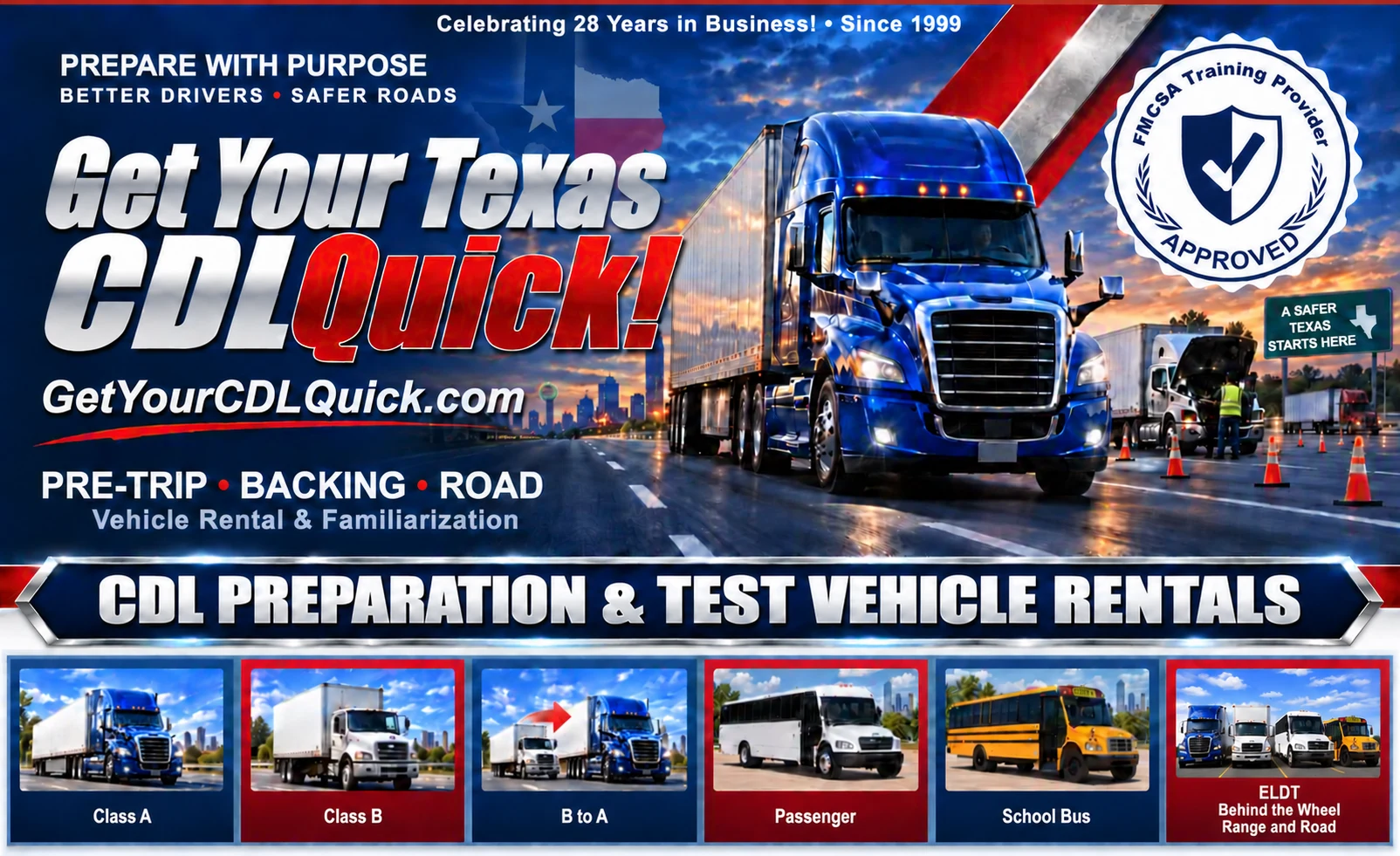
Class A truck rental and familiarization · Class B to Class A upgrade · Hotshot vehicle options
Class B: single commercial vehicles
Class B commonly applies to qualifying single commercial vehicles. Vehicle configuration, brake system and transmission matter when selecting the vehicle for your Texas DPS skills test. Confirm the vehicle suitable for your license goal before reserving.
Passenger and school bus paths
Passenger and school bus endorsements address additional operating responsibilities and testing requirements. The CDL class and vehicle must also fit the bus configuration. Ask about the passenger or school bus available, permit and endorsement requirements, and any applicable theory and behind-the-wheel activity.
Knowledge tests, ELDT and vehicle rental
These are separate parts of planning your CDL path. CLP preparation supports knowledge-test study. Online ELDT theory and in-person ELDT range and road address applicable federal training requirements. A Texas DPS test vehicle rental provides vehicle use for your appointment and does not guarantee a passing result or establish ELDT completion.
Start with the equipment
Write down whether you will operate a combination or a single vehicle, the weight ratings, the trailer connection and the brake system. For a bus, include the passenger capacity and intended operation. Take those details to the official Texas DPS class descriptions before choosing a test vehicle.
Discuss your existing skills and intended vehicle
Get Your CDL Quick serves customers from across Texas at its Royse City vehicle location. Our paid rental and limited familiarization services are intended for customers building on previously acquired knowledge and skills. Contact us about your current license or permit, planned vehicle class, transmission, endorsements and appointment location.
Discuss your CDL path Review service prices
Official information: Texas DPS CDL requirements · Texas DPS ELDT requirements.
Compare Texas Class A, Class B and Class C licenses
A commercial driver's license (CDL) class describes the vehicles you may operate. Endorsements and restrictions add separate conditions. A regular Texas Class C driver license is different from a Class C CDL.
- Class A: qualifying combinations with a gross combination weight rating of 26,001 pounds or more and a towed vehicle rated over 10,000 pounds.
- Class B: qualifying single vehicles rated at 26,001 pounds or more, including those towing a vehicle rated at 10,000 pounds or less. Texas also has passenger-capacity provisions.
- Class C CDL: vehicles outside Classes A and B that carry 16–23 people, including the driver, or transport hazardous materials requiring placards.
Texas also provides noncommercial Class A and B licenses for some exempt vehicles. Verify the license for your intended use with Texas DPS CDL class definitions.
Next steps: commercial learner's permit preparation · Class B CDL vehicle rental · service descriptions and refund terms.